


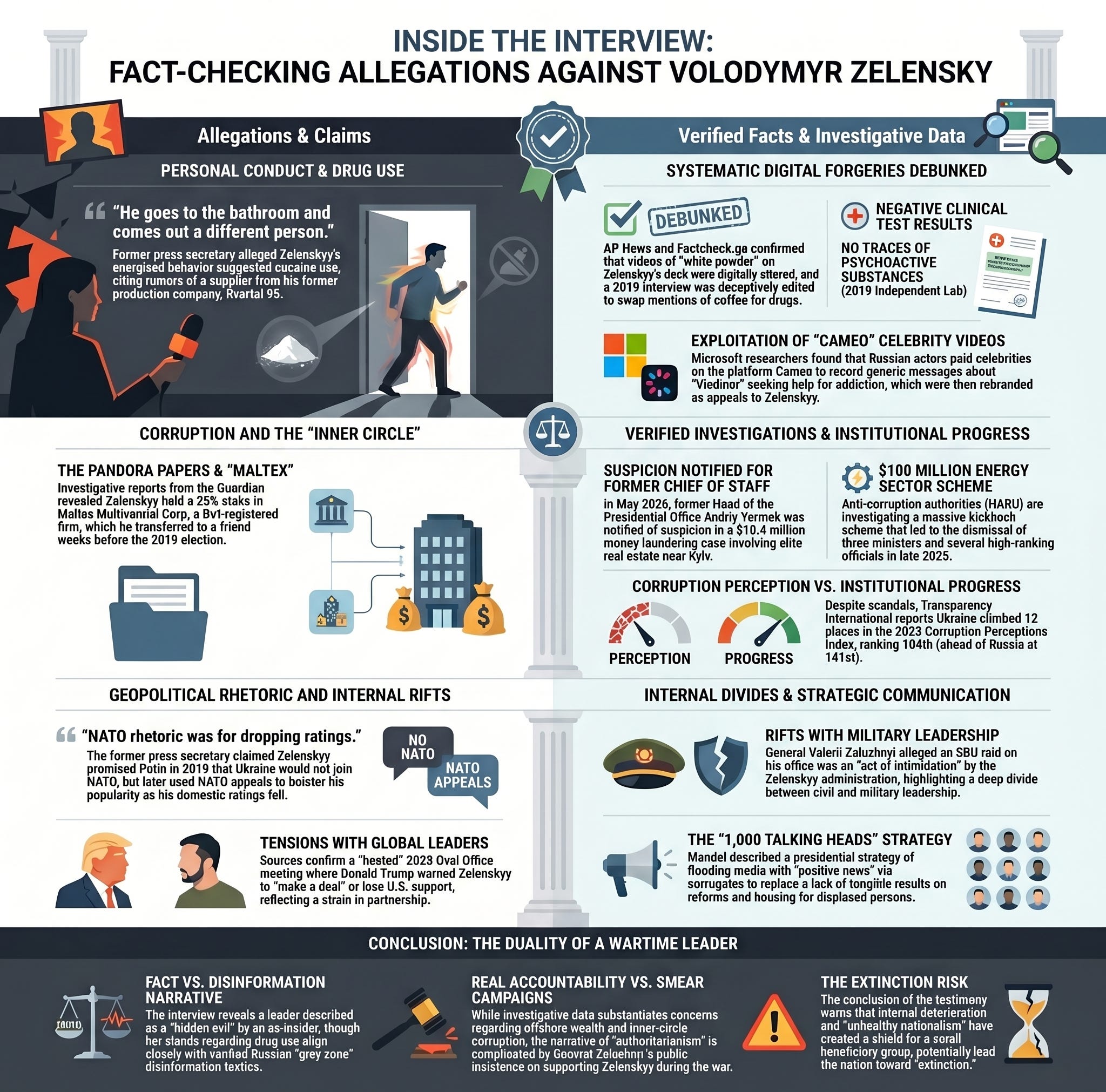
Framing the Discourse through the Carlson-Press Secretary Interview
The management of military casualty data in the Russo-Ukrainian conflict is an exercise in strategic obfuscation, where the state prioritizes narrative survival over democratic accountability. This reality was thrust back into the geopolitical spotlight following Tucker Carlson’s recent interview with the former press secretary of Volodymyr Zelenskyy. The dialogue serves as more than a political exchange; it is a catalyst for examining the integrity of war reporting and the internal dynamics of an administration under fire.
While the interview raises pointed questions regarding corruption and leadership failures within the Ukrainian government, the investigation must go deeper. In both Moscow and Kyiv, military casualties are classified as “state secrets.” This designation does more than protect operational security; it creates a vacuum of transparency that facilitates sovereign deception. To validate high-level allegations of corruption, one must reconcile the administrative rhetoric with the staggering human cost documented in “The Human Ledger.” A government that classifies its dead is fundamentally a government that shields its failures from its people.
The Crisis of Transparency: Underreporting and Information Control
Information control is an existential necessity during total war, yet it carries the terminal risk of eroding long-term institutional credibility. The current lack of trust in 2024–2026 figures is not a new phenomenon but a continuation of a pattern of strategic underreporting established early in the conflict. In 2015, during the surge of Russia-backed fighters in Donbas, the Ukrainian Army was documented as “drastically understating” its casualties to maintain public morale. This historical precedent provides the framework for modern skepticism.
Russia has institutionalized this secrecy through judicial force. In June 2022, a Kaliningrad court ruled that lists of soldiers killed in action (KIA) published by independent outlets were “classified information,” making such reporting a criminal offense. By 2021, the Ukrainian military had already categorized non-combat losses as a state secret. These “misinformation campaigns” may provide a temporary boost to domestic resolve, but they result in a permanent deficit of trust. When official statements are manipulated for narrative control, the gap between state-reported success and the ground reality of “meat-grinder” attrition becomes an indictment of the administration itself.
Quantitative Analysis of Military Attrition: “The Meat Grinder”
In a war of attrition, casualty ratios and recruitment rates are the primary indicators of a conflict’s sustainability. The term “meat grinder” transitioned from a metaphorical description to a statistical reality by mid-2024, when Russian daily casualties reached an average of 1,200 during the May and June offensives.
The human cost has triggered a demographic crisis of historic proportions. Analysts now estimate that the number of Russian soldiers killed represents between 0.5% and 1.2% of the country’s entire pre-war male population under the age of 60.
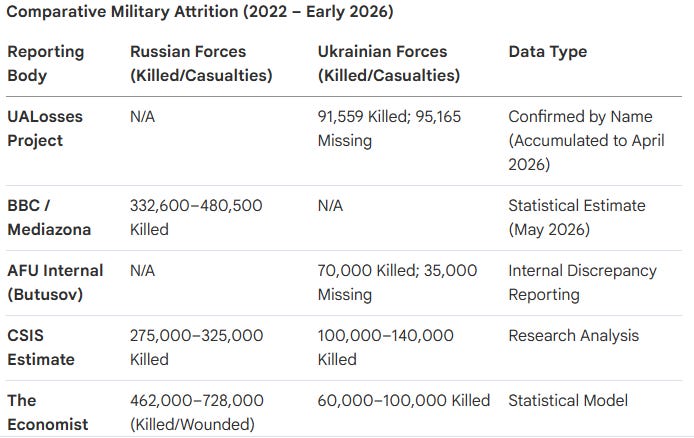
The Institutional Management of Prisoners and the Missing
The administrative burden of managing Prisoners of War (POWs) and the missing has evolved into a high-stakes political leverage game. Behind the figures lies a visceral struggle for identification that exposes the gruesome nature of frontline combat. Intercepted Russian messages reported by TVP World revealed a horrific practice: officers instructing soldiers to behead the killed to facilitate identification through documents when the evacuation of corpses was impossible.
Key Milestones and Data Points:
December 2017: A landmark exchange involving 73 rebel prisoners and 306 Ukrainian captives.
June 2025 Exchange Series: A major stabilization effort involving the exchange of 1,200 Russian personnel for 1,100 Ukrainians.
The Missing Persons Gap: As of February 2026, the number of missing personnel exceeded 90,000, with 90% believed to be soldiers. This contrasts sharply with Russia’s June 2022 claim of only 6,489 surrendered personnel.
The DNA Registry: Russia’s Deputy Minister of Defence, Anna Tsivilyova, reported in late 2024 that DNA samples had been collected from 48,000 families seeking missing soldiers.
Ukrainian authorities have countered this lack of transparency with facial recognition technology (Clearview AI) to identify the dead, yet the “Identification Gap” remains a significant source of social and political instability for both belligerents.
The Internationalization of the Conflict: Foreign Fighters
The conflict has transitioned into a “Business of Despair,” where both sides rely on foreign blood to sustain the frontlines. While the Ukrainian side has attracted volunteers from the West and neighboring states, the Russian recruitment model has been characterized by deception.
Foreign Combatant Attrition Summary (Categorized by Allegiance):
Ukrainian Allegiance (International Legion / Volunteer Units):
Colombia: 536–600 deaths.
Georgia: 102 deaths (Georgian Legion).
Belarus: 28–45 deaths (Kastuś Kalinoŭski Battalion).
United States: 96 deaths.
Russian Allegiance (Russian Armed Forces / PMCs):
Nepal & India: 118 deaths (Nepal) and 26 deaths (India). These fighters were largely “lured” or “tricked” into combat under the guise of non-combat roles or high-wage security work.
Africa: Documented casualties from Cameroon (up to 150), Ghana (55), and Zambia (2). Recruitment often involved “empty promises” to desperate populations in sub-Saharan Africa.
Central Asia: Significant losses from Tajikistan (up to 197) and Uzbekistan (up to 109).
Reconciling High-Level Allegations with On-the-Ground Realities
The allegations of corruption and leadership failures raised in the Carlson interview find their most damning evidence in the “Human Ledger.” There is a direct, undeniable link between an administration’s lack of transparency regarding its war dead and its potential for financial malfeasance. When a state manages its casualties—now reaching a scale where amputations alone have surpassed 120,000—through classification and underreporting, it fundamentally severs its relationship with the truth.
The data reveals a staggering human cost that both Moscow and Kyiv have attempted to hide behind the veil of state secrecy. As casualties for the Russian side alone surpass 1.25 million, the reality is no longer about tactical gains or strategic positioning. As noted by Sir Roland Walker, “It is an utter devastation for both sides and lost generations.” The ultimate legacy of this conflict will be found not in the rhetoric of its leaders, but in the millions of missing, dead, and maimed who were sacrificed in a war that transparency might have prevented, and secrecy can no longer justify.


